PrognoHealth – Corporate Health & Wellness Specialist

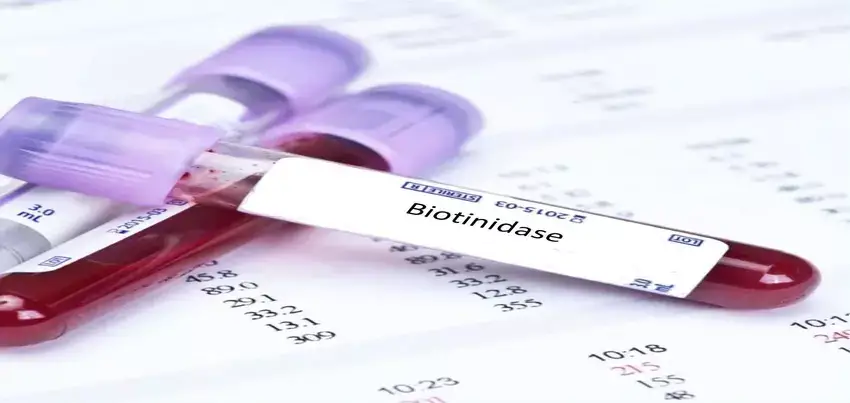
Biotinidase Test Biotinidase is an enzyme that helps the body recycle and use the nutrient biotin. A Biotinidase quantitative blood test measures the level of biotinidase in the blood. It is used to diagnose and monitor biotinidase deficiency, which is a rare disorder that can lead to a variety of health problems if left untreated. Pre-test preparation:There is no specific preparation required for this test. Testing method:A blood sample is taken and sent to a laboratory for analysis. Common symptoms that may prompt a healthcare provider to prescribe a biotinidase quantitative blood test include:SeizuresSkin rashAlopecia (hair loss)Neurological symptoms such as ataxia (lack of muscle coordination), developmental delays, and hearing lossGastrointestinal symptoms such as vomiting and diarrhea Diagnosis:Low levels of biotinidase in the blood can indicate a deficiency of the enzyme. Biotinidase deficiency is an inherited disorder and can be diagnosed at birth or later in life. Reference range:Normal values for biotinidase levels in the blood vary depending on the laboratory, but generally range from 10 to 60 nanograms per milliliter (ng/mL). It’s important to note that the test results should be interpreted in the context of the patient’s clinical presentation and other test results. A single test result should not be used as the sole basis for diagnosis and treatment decisions. A qualified healthcare professional should interpret the test results and give you a proper diagnosis. Additionally, other biochemical and genetic tests may be used to confirm the diagnosis of biotinidase deficiency.
Read More
World Hypertension Day is observed on May 17th each year and serves as a global initiative to raise awareness about hypertension and its impact on individuals and communities worldwide.
Read More
Maintaining a healthy heart is crucial for overall well-being. By adopting a few lifestyle changes,
Read More
Staying mentally sharp is crucial for success. In today’s fast-paced corporate world age-related memory loss has become a concern.
Read More
Calcium Test Calcium is a mineral that is essential for the proper functioning of the body. It is required for the formation and maintenance of healthy bones and teeth, and it also plays a role in muscle function, nerve transmission, and blood clotting.A calcium test is typically ordered by a healthcare provider to evaluate the level of calcium in the blood. This test can be used to diagnose and monitor conditions such as hyperparathyroidism, hypoparathyroidism, and malabsorption syndromes. Pre-test preparation for a calcium test typically includes fasting for 8-12 hours before the test. Certain medications, such as diuretics, can affect the results of the test, so it’s important to tell your healthcare provider about any medications you are taking before the test.The testing method for a calcium test is typically a blood test. A small sample of blood is taken from a vein in the arm and sent to a laboratory for analysis. Common symptoms that may prompt a healthcare provider to order a calcium test include muscle weakness, bone pain, and frequent fractures. However, many conditions that affect calcium levels may not cause any symptoms. Diagnosis of conditions related to calcium levels is typically based on the results of the calcium test in combination with other tests, such as a parathyroid hormone test. Reference ranges for a calcium test vary depending on the laboratory, but generally, normal values are around 8.6-10.2 mg/dL (2.15-2.55 mmol/L).It’s important to note that a single test result is not diagnostic by itself, and a patient’s clinical presentation, including symptoms and other laboratory test results, should be taken into account in determining a diagnosis. It’s also important to note that the information provided here is for informational purposes only and should not be used as a substitute for professional medical advice, diagnosis, or treatment.
Read More
Blood Urea Nitrogen (BUN) Test A Blood Urea Nitrogen (BUN) test is a laboratory test that measures the amount of urea nitrogen in the blood. Urea nitrogen is a waste product produced by the liver and excreted by the kidneys. The BUN test is often used to assess kidney function and to evaluate the balance of fluids and electrolytes in the body. Pre-test preparation: No special preparation is usually needed for a BUN test. However, you may be asked to fast for a certain period of time before the test, typically for 8-12 hours, to ensure accurate results. Testing method: A BUN test is typically performed on a blood sample taken from a vein in the arm. The sample is sent to a laboratory for analysis. Common symptoms for prescribing this test: BUN test is usually ordered when a person has symptoms of kidney disease, such as blood in the urine, decreased urine output, swelling in the legs, or when a person has a history of kidney disease or is at high risk for kidney disease. Diagnosis: Elevated BUN levels may indicate kidney disease or a problem with the liver or heart. Low BUN levels may indicate malnutrition or a problem with the liver or muscles. Reference range: The normal range for BUN is typically 7-20 mg/dL. However, this can vary depending on the lab that performs the test, and the range may be different for men and women. Normal values: The normal values for BUN test can vary depending on the lab that performs the test, age, sex and overall health of the patient. Medical disclaimer: This information is for educational purposes only and is not intended to replace the advice of a medical professional. It is important to always consult a physician or other qualified healthcare provider before making any decisions about your health. The Blood Urea Nitrogen (BUN) test measures the amount of nitrogen in your blood that comes from the waste product urea. Urea is formed in the liver when protein is broken down into its component parts (amino acids), and ammonia is produced as a byproduct. The ammonia is then converted into urea, a less toxic compound, which is transported by the blood to the kidneys and excreted in urine. The BUN test helps assess how well your kidneys and liver are functioning. Why is the BUN Test Done? The BUN test is commonly used to: 1. Evaluate Kidney Function:o High BUN levels may indicate impaired kidney function or kidney disease.2. Assess Liver Function:o Because urea is produced in the liver, liver disease can affect BUN levels.3. Monitor Patients with Chronic Conditions:o Conditions such as chronic kidney disease (CKD) or liver disease often require regular monitoring of BUN levels.4. Determine the Effectiveness of Dialysis:o BUN levels can help evaluate how well dialysis is removing urea from the blood.5. Investigate Symptoms:o Symptoms like fatigue, confusion, or nausea can be related to kidney or liver issues.6. Pre-Surgical Evaluation:o Part of a routine workup before surgery to ensure the kidneys and liver are functioning properly. How is the BUN Test Performed? The BUN test is a simple blood test. Here’s how it’s typically performed: 1. Preparation:o Generally, no special preparation is needed, though your healthcare provider may advise you to fast or avoid certain medications before the test.2. Sample Collection:o A healthcare professional draws blood from a vein in your arm, usually using a small needle.o The blood is collected into a vial or test tube.3. Laboratory Analysis:o The blood sample is sent to a laboratory, where the BUN level is measured and reported. Normal BUN Levels • Adults: Typically, 7 to 20 mg/dL (2.5 to 7.1 mmol/L).• Children: The normal range can vary slightly depending on age.• Elderly: BUN levels may be slightly higher due to declining kidney function with age. These ranges can vary slightly between laboratories, so it’s important to refer to the reference range provided with your test results. Factors Affecting BUN Levels BUN levels can be influenced by various factors, including: 1. Kidney Function:o Impaired kidney function can lead to higher BUN levels because the kidneys are less able to remove urea from the blood.2. Liver Function:o Liver disease can lower BUN levels since the liver may produce less urea.3. Hydration Status:o Dehydration can increase BUN levels as less blood volume leads to more concentrated urea.o Overhydration can decrease BUN levels by diluting the blood.4. Diet:o High protein intake can raise BUN levels as more protein breakdown produces more urea.o Low protein intake or malnutrition can decrease BUN levels.5. Medications:o Certain drugs, such as antibiotics, diuretics, and corticosteroids, can affect BUN levels.6. Age and Muscle Mass:o Older age and lower muscle mass can impact BUN levels.7. Heart Function:o Heart failure can influence kidney perfusion, affecting BUN levels. Interpreting BUN Test Results 1. High BUN Levels (Azotemia):o Kidney Disease: Acute or chronic renal failure, glomerulonephritis, or acute tubular necrosis.o Dehydration: Reduced blood volume leads to increased concentration of urea.o High Protein Diet: Excessive protein intake or catabolism increases urea production.o Heart Failure: Reduced blood flow to the kidneys can elevate BUN levels.o Shock or Trauma: Severe injury or blood loss can affect kidney function. 2. Low BUN Levels:o Liver Disease: Conditions like cirrhosis or severe liver damage reduce urea production.o Malnutrition or Low Protein Diet: Insufficient protein intake or absorption.o Overhydration: Excess fluid intake dilutes blood urea concentration.o Pregnancy: Increased plasma volume and changes in protein metabolism. Clinical Context and BUN/Creatinine Ratio BUN is often evaluated alongside creatinine, another waste product filtered by the kidneys. The BUN/Creatinine Ratio can provide additional insights: • Normal Ratio: 10:1 to 20:1.• High Ratio: Can indicate conditions such as dehydration, gastrointestinal bleeding, or high protein intake.• Low Ratio: May suggest liver disease or malnutrition. Limitations of the BUN Test While the BUN test is useful, it has limitations: 1. Non-Specific:o BUN levels can be influenced by many factors, not just kidney function.2. Affected by External Factors:o Hydration status, diet, and medications can significantly alter BUN levels.3. Not
Read More
Adult Hemoglobin Electrophoresis (Hb-Elec) test is a laboratory test that separates different types of hemoglobin present in the blood by using an electric current.
Read More
Partial Thromboplastin Time (PTT) Test The Partial Thromboplastin Time (PTT) test is a blood test that measures how long it takes for blood to clot. It is used to evaluate the intrinsic and common pathways of the coagulation cascade, specifically the activity of clotting factors VIII, IX, XI, XII, and high molecular weight kininogen. Pre-test preparation: It is important to inform the healthcare provider of any medications being taken as some may affect the results of the test. Avoid taking aspirin, non-steroidal anti-inflammatory drugs (NSAIDs), or vitamin E supplements for at least one week before the test. Testing method: A small sample of blood is taken from a vein in the arm using a needle and syringe. The sample is then sent to a laboratory for analysis. Common symptoms for prescribing this test: Unexpected or heavy bleeding Bruising easily Blood in the urine or stool Prolonged bleeding after injury or surgery Prolonged bleeding after tooth extraction Excessive menstrual bleeding Blood clots Diagnosis: The PTT test is used to help diagnose and monitor bleeding disorders such as hemophilia and von Willebrand disease, as well as to monitor the effectiveness of treatment for these conditions. Also, it is used to monitor the effectiveness of heparin therapy, a type of anticoagulant medication. Reference range: The reference range for PTT test varies depending on the laboratory that performs the test. Typically, the normal range for PTT test is 25-36 seconds. However, it is important to note that the reference range can vary depending on the lab that performed the test, the patient’s age, sex, and overall health. Normal values: Normal values for PTT test vary depending on the lab that performed the test, but typically fall within the range of 25-36 seconds. It is important to consult with a doctor or healthcare professional for any questions or concerns regarding the PTT test or any other medical test.
Read More
Absolute Eosinophil Count (AEC) Test The Absolute Eosinophil Count (AEC) test is a blood test that measures the number of eosinophils, a type of white blood cell, in a person’s blood. Eosinophils are involved in the body’s immune response and are often elevated in certain diseases such as allergies, parasitic infections, and certain types of cancer. Pre-test preparation: No special preparation is usually required for this test. Testing method: A small sample of blood is taken from a vein in the arm using a needle and syringe. The blood sample is sent to a laboratory for analysis. Common Symptoms for prescribing this test: Itchy skin, rash, or hives Shortness of breath Swelling of the face, lips, tongue, or throat Persistent or recurring infections Abdominal pain Diarrhea Fatigue Unusual weight loss Diagnosis: The AEC test is often used to help diagnose conditions such as allergies, asthma, and parasitic infections. It can also be used to monitor the effectiveness of treatment for these conditions. Reference range: The reference range for AEC varies depending on the laboratory that performs the test. Typically, a normal AEC is between 150 and 450 eosinophils per microliter of blood. However, it is important to note that the reference range can vary depending on the lab that performed the test and the patient’s age, sex, and overall health. Normal values: AEC values between 150 and 450 eosinophils per microliter of blood are considered normal in most laboratories. It is important to consult with a doctor or healthcare professional for any questions or concerns regarding the AEC test or any other medical test.
Read More
Cervical Cancer Cervical cancer is a type of cancer that occurs in the cervix, the lower part of the uterus that connects to the vagina. It is caused by the human papillomavirus (HPV), a sexually transmitted infection. Cervical cancer is one of the most preventable types of cancer, and early detection through regular screenings can greatly improve outcomes. Symptoms of cervical cancer may not be present in the early stages, but as the cancer progresses, symptoms may include abnormal vaginal bleeding, pelvic pain, and pain during intercourse. These symptoms can also be caused by other conditions, so it’s important to see a healthcare provider for proper diagnosis. Diagnosis of cervical cancer is typically made through a pelvic examination and pap smear test. If abnormal cells are found, further testing such as a colposcopy, biopsy, and HPV test may be done to confirm the diagnosis. Treatment for cervical cancer depends on the stage of the cancer and can include surgery, radiation therapy, and chemotherapy. In early stages, cervical cancer can often be treated with surgery to remove the abnormal tissue. In advanced stages, a combination of treatments may be used to improve outcomes. Preventing cervical cancer involves reducing the risk of contracting HPV, the virus that causes cervical cancer. This can include getting the HPV vaccine, practicing safe sex, and avoiding smoking and excessive alcohol consumption. Annual health check-ups and screenings are an important tool in preventing cervical cancer. During these check-ups, healthcare providers can perform pelvic exams and pap tests to detect any abnormal cells. Corporate health and wellness programs can also play a role in preventing cervical cancer by promoting education about the importance of regular screenings and providing access to preventative care. A healthy diet and regular exercise can also help prevent cervical cancer. Eating a diet rich in fruits, vegetables, and whole grains, and low in processed foods can help reduce the risk of certain cancers. Regular exercise can also help maintain a healthy weight, improve overall health, and reduce the risk of certain cancers. In conclusion, cervical cancer is a type of cancer that occurs in the cervix and is caused by the human papillomavirus (HPV). It is one of the most preventable types of cancer, and early detection through regular screenings can greatly improve outcomes. Symptoms may not be present in the early stages, but as the cancer progresses, symptoms may include abnormal vaginal bleeding, pelvic pain, and pain during intercourse. The treatment for cervical cancer depends on the stage of the cancer and can include surgery, radiation therapy, and chemotherapy. To prevent cervical cancer, it is important to reduce the risk of contracting HPV, get the HPV vaccine, practice safe sex, and avoid smoking and excessive alcohol consumption. Annual health check-ups and screenings, corporate health and wellness programs, a healthy diet and regular exercise can also play a role in preventing cervical cancer.
Read MoreTop rated products
-
 Full Body Health Checkup I
Original price was: ₹3,000.00.₹1,770.00Current price is: ₹1,770.00.
Full Body Health Checkup I
Original price was: ₹3,000.00.₹1,770.00Current price is: ₹1,770.00.
-
 MFG IND PACK III
Original price was: ₹3,900.00.₹2,145.00Current price is: ₹2,145.00.
MFG IND PACK III
Original price was: ₹3,900.00.₹2,145.00Current price is: ₹2,145.00.
-
 Dengue NS1 Antigen Test
₹900.00
Dengue NS1 Antigen Test
₹900.00
-
 Lipoprotein (A) Blood Test – Lp(a)
₹750.00
Lipoprotein (A) Blood Test – Lp(a)
₹750.00
-
 Healthy Life Advance Male
Original price was: ₹15,000.00.₹8,250.00Current price is: ₹8,250.00.
Healthy Life Advance Male
Original price was: ₹15,000.00.₹8,250.00Current price is: ₹8,250.00.